As I began this article, I wanted to find out the different ways Christmas is celebrated all over the world. Yet, as I delved deeper into my research, I found that the Christmas traditions that are celebrated all over the world are remarkably similar. There are four fundamental attributes, each county celebrates with special foods, celebrations, decorations, and various presents of some kind or another.
Of course, depending on the climate, things often change. For instance in Australia, where their Christmas is celebrated during their summer, their Santa Clause wears shorts and trades in his reindeer for kangaroos. The dinner consists of cold food such as fish and crackers. In the Falkland Islands, where 3,000 people and 150,000 sheep live, lamb is their food of choice because turkey is very expensive to fly from the United Kingdom. In Venezuela, they have ‘hallacas’ which is a combination of beef, pork, chicken, capers, raisins, and olives rolled up in plantain leaves and steamed. This is reminiscent of the tamales that are such a mainstay for Mexican families during the holiday. In Croatia, the meal on Christmas Day is often turkey, goose or duck with a side dish of ‘sarma’ (cabbage rolls filled with minced pork meat). They also top off the meal with ‘Krafne’ filled with jam, jelly, marmalade or chocolate.
Celebrations are also a constant in each country with plays, nativity scenes, and caroling a large part of this holiday. In the Dominican Republic of Congo, full musical evenings with multiple choirs and nativity plays last long into the evening and early morning. In Brazil nativity scenes called ‘Os Pastores’ (the Shepherds) are available for everyone to enjoy. In Romania ‘dubasi’ or bands of 50-60 unmarried men sing through the streets, the same happens in Greece where the young men carry wooden boats and receive gifts. Going to Mass for church services is also the norm as in Portugal where the “Missa do Galo” or mass of the rooster is celebrated. In South Africa, where it is a hot time of year, people walk through the streets singing carols by candlelight. What a beautiful sight that must be!
As far as decorations, some countries take the time to spruce up their homes like painting it as people do in Trinidad and Tobago. Trees of various shapes and forms are the norm as well with spider web decorations in the Ukraine part of bringing good luck into the homes. In Greece basil is kept in a bowl of water in the middle of the table and used to sprinkle holy water throughout the house to ward away evil spirits. Nativity scenes or creche are often used as decoration as in Malta where the nativity cribs called ‘presepju’ are decorated with ‘pasturi’ or shepherds and angels. Also, seeds such as wheat, grain, and canary seed ‘gulbiena’ are grown to decorate the bed of the baby Jesus.
What I found most fascinating is how presents are looked at and used throughout the world. In most countries like Zimbabwe, new clothes are given as presents every year. In Zambia, presents for the less fortunate are brought to the church. In New Zealand, where the weather is warm this time of year, ‘jandals’ or flip flops are a favorite gift. Speaking of shoes, in some countries the shoes are dusted off and left out to be filled with sweets and presents this is also true of socks. Not only are presents left under the tree, but are places in shoes as in Romania and Portugal and are often delivered by the baby Jesus as in Slovakia.
I find it incredible that no matter where you are, sharing happy moments with family and friends is an integral part of this time of year. I wish all of you a wonderful Christmas and holiday season. Take care! And if you would like to learn more, check out this great website:www.whychristmas.com.
“When the legend becomes fact…print the legend”: The tragic death of Johann Conrad “JC” Muehleisen
By Jacqueline L. Starkey
Melcena Irvine Millison, 1889 – from family collection
My feisty, opinionated grandmother detested her middle name. That name was Melcena, given to her in honor of her grandmother, Melcena Millison. As a child, I was fascinated by this name that appeared to be handed down to unwilling recipients and was thankful that my parents did not follow family naming traditions.
When I began researching my maternal line, Melcena’s life was a focus area. I quickly found that to understand Melcena, I had to learn about her father, my third-great-grandfather, then known as Unknown Millison. Since no family researchers had yet identified him, he was a true brick wall. My research to break down that wall led me on a virtual journey starting in Germany and ending in Deadwood, South Dakota. Along…
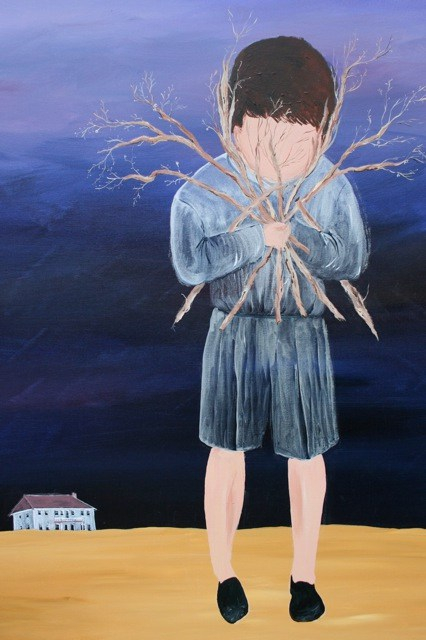
Pictures have a way of inspiring my writing and this one, in particular, speaks volumes.
This is whatthe artist, Nyree Reynolds, says about her wonderful painting.
Gathering Chips
This little 4-year-old boy was sent out from England to Australia to help populate Australia. The little ones that arrived had to walk around picking up twigs for the cooking stoves. It was very sad for these children to have to leave their families. The British and Australian government told lies to their families that they would see their kids again. Many of them didn’t.
****************
She has beautifully illustrated a very sad point in Australian history. She has also revealed the tragedy that occurs when a child has to grow up without roots. An example closer to home is what happened to many of our Native American children who were removed from their homes and sent to boarding schools to be assimilated into mainstream society.
When a child has been removed from their home and family or moved from place to place for a long period of time, they lose their sense of self. This is even more apparent when a child comes from a multicultural/multiracial background.
So, in order to find some sense of who they are, they try on different personas. I have seen this multiple times in the children I’ve taught. I watch as they attempt to fit into one place and then another and finally sometimes settle on being a loner not fitting in anywhere.
That is the biggest travesty of all. For when a person finds out about their family roots and traditions and the hardships their ancestors had to overcome, they come to realize those same characteristics; strength, hope, resiliency, intuitiveness, and creativity, are a part of their makeup as well.
They can also grow to appreciate their family members who are still alive and can share their memories of their journey through life. This is the biggest blessing of all.
So, I’d like to encourage you to start looking for your roots and appreciate the older family members who are a wealth spring of information and insight.
Sometimes events happen in life that forces us to remember. We go about our busy lives – taking kids to soccer and football, or picking up grandchildren (depending on your phase of life) and trying to fit exercise into our schedule and then bam! Something happens and we are forced into remembering our ancestors – those who have gone before us or even those we have had lifelong relationships that have passed. That happened to me this week.
When my mom called to tell me my Aunt Linda had passed away I wasn’t surprised. She really hasn’t been with us for several years. Her mind has been trapped by dementia and the lively, kind sometimes sassy aunt I adored just wasn’t herself for so very long. But at the news of her passing I was surprised by the sadness I felt, but also the happiness as my memories of her came flooding back. I talked to my husband about it, who hadn’t really known my aunt when she was healthy, I talked to my kids, because they knew how much I loved her, but the true remembering didn’t come until I talked to my sister. We talked for a long time about close experiences we each had with her and how thankful we were for parents who gave us opportunities to love our aunts and uncles even though we love and miss them when they are gone. But the most important part of our talk was, you guessed it, the remembering.
My Aunt Linda holding me when I was a toddler over 40 years ago. I love to remember her.
For the past few nights since her death, as I’ve tried to find sleep I remember her. The way she smelled (of some kind of floral lotion she wore), the way she looked (always beautiful – perfect makeup and hair) and the way she sounded (she was from Texas and her southern drawl was both appealing and comforting.) She could shop like no other and put on a “supper” spread that would make anyone hungry. Those memories are sweet to me and I feel the need to capture them. But remembering her late at night isn’t enough. I need to document her life – remember her with purpose. How? Write it down! Journal it! Record her life story somewhere so other people can enjoy it. That is the true power in remembering.
A few weeks ago I wrote about how important it is to teach our children to remember who they are. (Read it here.) But why is it important for adults to remember our family history and stories? I have a few ideas.
Remembering ancestors gives us confidence.
Everyone deserves to be remembered.
It brings us closer to our living and dead relatives.
It helps us understand who we are.
Uncovering the mysteries of our ancestors keeps our minds sharp and it is fun!
1. Remembering ancestors gives us confidence.
I have done quite a bit of research as to why telling our children their family stories gives them confidence and it only makes sense it does the same for us as adults. How many of your great-grandparents can you name? Do you know a story for each? Discovering those stories can be somewhat of a miracle in our lives. The other day my husband made a huge discovery with his family history, finding an ancestor that fought in the Revolutionary War directly with George Washington. Wow! No matter how distant that relative is, how can you not feel good about yourself knowing someone with your blood rubbed elbows with George Washington? Professional genealogist, Jacqueline Kirk, said she got “hooked” on genealogy when she found a census record from the UK 1901 census. She learned new skills and found she had a talent for the work. “When my husband died family history gave me an escape from grief. I have made so many friends in the family history world and at a time when my confidence was low family history research restored my self-esteem. I owe it a lot,” she said.
It seems the confidence that comes from remembering is two-pronged: Yes, finding family stories takes time and energy, but once a project is completed it is something to be proud of. That gives us confidence. Also, learning the amazing stories of our families can fortify us to combat hard things. The video below by Sheri Dew speaks to that point.
2. Everyone deserves to be remembered.
At RootsTech this past year one of the quotes that stood out to me the most came from FamilySearch CEO, Steve Rockwood: “Everyone deserves to be remembered.” As he said it you could hear a collective intake of breath around the room. Such a simple thought, but so profound. Yes, everyone does deserve to be remembered. I was working on a project earlier this year trying to piece some sort of story together from a gentleman’s family during Civil War times. As I was looking at the lists of names and dates a semblance of a life well-lived started to come together. Until that project, he was a name on a census. With some diligent digging, he emerged as a Civil War Veteran who traveled back and forth between his home and the battlefield. He was remembered. And he more than deserved it.
Everyone deserves to be remembered.
Family historian, Liz Gauffreau, started researching her maternal grandmother’s education after being inspired by a photograph of her university days during World War I. Now she feels a kinship to her that she didn’t have when she was alive. “What means the most to me is that I’ve been able to show this side of her through my blog. She was such a private person that the family sold her short,” she said. She deserved to be remembered and Liz did it right.
3. It brings us closer to our relatives – both living and dead.
When we remember our family members we get closer to our living relatives too. This is from the post on facebook of my family’s video. There was a lot of love in those comments.
It’s no secret that remembering brings us closer to our relatives who have gone before, but what about those still alive? About 20 years ago my husband and I did a project where we interviewed every family member on my mother’s side from my grandma and grandpa right down to my youngest cousin. We had dozens of videotapes chronicling all the memories shared. Last year we digitized them and shared them on our family Facebook page just a week before our family reunion. The reaction was something special. My cousin Chris Ellis wrote, “I love this so much. Thank you, Matt and Rachel, for this. It is really emotional for me to hear Grandpa and Grandma voices and the stories. That is shorthand for it made me cry… and laugh, and made me happy.” His was one of many echoing the same sentiment. Our family had this moment of closeness because we all remembered together.
I think for many of us who remember our ancestors through genealogy or story writing we feel a tug of the divine as we do the work. I am a firm believer those ancestors are close by helping us find their dates and their stories. That spark keeps us going in the work and we feel a sense of closeness that is hard to describe to others until we experience it ourselves. The phrase “angels among us” comes to mind. My writing partner, Rhonda Lauritzen, had one of those moments and writes about it in detail here. She talked about waking with a start at 3 a.m. Instead of lying awake in bed, she decided to get up and do some work. She started to peruse the Utah Genealogical Society newsletter and ran across a story that loosely related to an ancestor’s story she and her brother had spoken about the day before. She emailed it to him with a quick note: “I thought I’d forward in light of our conversation yesterday.’ A few hours later, Matthew emails me back and says, ‘Very Interesting, Rhonda. Look at the last full paragraph on page two. The Indian girl, Waddie, is the exact girl I was reading about and mentioned to you.’” Rhonda said,
“The hairs on my arm prickle, as though I was awakened at 3 a.m. to find this story. As though the story wants to be known.”
Rhonda wondered if the Native American woman in the story, Nellie Leithead Justet, wanted to be remembered.
Family of Deborah Lamoreaux Leithead, husband James Leithead, and their children including adopted Nellie (Waddie) on the right. Waddie is the woman Rhonda was prompted to find at 3 a.m.
4. It helps us understand who we are.
As adults, although we don’t always like to admit it out loud, we feel a little lost at times. We wonder what our purpose is or if we are doing it right. My oldest child is 23 and I am still waiting to feel like a “grown-up” myself! Remembering our family gives us purpose and helps us understand who we are.
Diane Lund belongs to the Geneablogger’s Tribe and found an interesting sense of belonging in doing some family history research.
“I started researching after I found a purple velvet cover photo album with photos from the mid 19th century. It belonged to my grandmother. I only recognized a couple of people, so I started to look for any writing or clues in the photos. There were a few pictures that were taken in Rome – odd, since my grandmother was from Pennsylvania. My brother was able to identify the photographer was the official Vatican photographer. One of the photos was my great grandmother’s brother, John, who was sent to Rome to study and who became a Catholic priest. I found the marriage record for my great grandparents, Ida and Charles, and Fr. John was the officiant. It means a little more to me because my uncle was a Catholic priest and was the officiant at my parents’ and my sister’s wedding and my brother is a Catholic priest and he was the officiant at my wedding.”
For Diane and so many others, finding a link or connection to an ancestor we have something in common with gives us a greater sense of self. Seeing old photos and seeing family resemblances is only the beginning of the commonalities that link our families together. DNA is helping people make breakthrough discoveries about themselves and others. I loved what renowned DNA expert CeCe Moore had to say at RootsTech in 2017. In her keynote address, CeCe noted that DNA helps human beings connect – something we all long for. “It’s providing answers to hundreds of thousands – maybe even millions of people,” she said. One of the most important things she’s learned is how strong biological bonds are. She doesn’t want to push aside nurturing, but has found that our ancestors live on through us and that nature has a “profound effect on who we are.” DNA helps genealogists find out everything they can, not just what appears on a chart. Read more about DNA and connections here.
5. Uncovering the mysteries of our ancestors keeps our minds sharp and it is fun!
I was talking to my aunt recently about why she loves family history and she said, “I feel like I’m an investigator putting together an important puzzle.” And she’s right. Family history and trying to find the stories so we can remember keeps us thinking and keeps our minds sharp. Remembering isn’t about living in the past it’s about giving meaning to lives well-lived so we can have one of those well-lived lives ourselves. Unlocking and discovering our ancestors keeps us on our toes in a new and interesting way. Last summer I was looking for some photos of my great-grandmother on FamilySearch. I was shocked to find a large downloaded history that I didn’t know existed. After all, only my grandfather and his descendants knew the history, right? Wrong. This relative wrote these words: “I hope that someone will come along that has the talent of writing to write this better than I can. For now here is the history.” I believe she wrote those words for me over 20 years ago. Now I need to get to work to write the history into story form. I’m glad she was looking out for me to keep my mind sharp and help me to remember.
This is my Great Grandma Kap with my grandpa and great-uncle. I stumbled upon some great stories I never knew just by trying to find some memories. Remembering ancestors keeps your mind sharp.
I hope that one day I will be that helpful for someone else. We find connections to places and events through remembering family stories the provide deep and abiding spiritual and personal connections. The hard life stories of our ancestors make us stronger as well. Please enjoy a few related to articles to the place, history and overcoming obstacles that make remembering all the more important.
At the end of all the remembering it does us no good if we don’t either record it orally or write it down. One of the best things that can be done is to create a story that can be cherished for generations. Here are a few tips to get the ball rolling.
Whatever way you enjoy uncovering the family history and telling family stories, the key is to do it now and it will be enough. Pick a category of family history to work on and get started. We would love to hear your feedback on why you love to remember! Please share a few ideas and stories of your own remembering journey!
Rachel J. Trotter is a senior writer/editor at Evalogue.Life – Tell Your Story. She tells people’s stories and shares hers to encourage others. She loves family storytelling. A graduate of Weber State University, she has had articles featured on LDSLiving.com and Mormon.org. She and her husband Mat have six children and live on the East Bench in Ogden, Utah.
A few years ago, after writing the first of a series of children’s books on family history and genealogy, I found a library in Houston, Texas that had a lock-in entitled “Genealogy in our Jammies.” I fell in love with this term because of the picture it represented.
Now, maybe you don’t want to go parading around in your pjs while doing research, but actually, it could be fun! This is the season, after all, to go and get those great matching jammies for Christmas morning.
Background first, right? Well, as a teacher, I participated in many a “Family Nights” through the schools. These were always exciting, engaging nights where everyone worked together on common tasks and celebrated at their attempts and successes in various academic activities. These were exhilarating and exciting events that everyone enjoyed.
That’s when the idea was born. Why not have Family Events for genealogy? Lock-ins seem to be the norm now with various associations around the country, but I never see anything about family events where the children are invited to participate. Having seen family events in action and having planned many myself, I found this a wonderful idea to bring in younger family members into the “fold,” so to speak, where they would become acclimated to doing actual family history research. Having worked on several such events, I know just how great they can be.
This is easily done and an exciting prospect for families longing to engage their children in such worthwhile events. Whenever families come together in this nature, it is beneficial to all.
If this interest you, I’ll be working on my genealogy and glad to help!
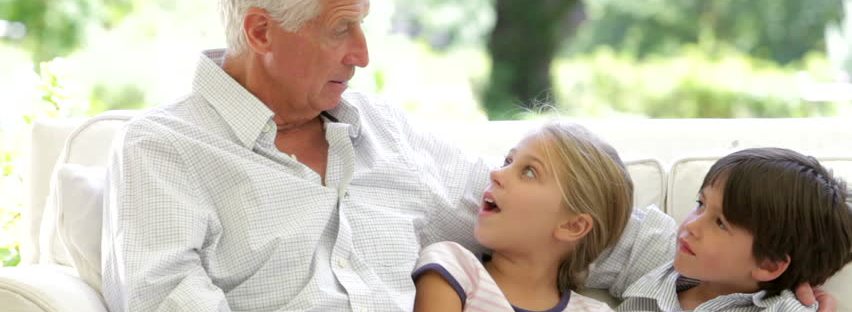
Encourage children to talk to their living relatives, especially the older ones. Hearing stories about what life was like in the past helps young people connect to the past. This connection brings generations together and establishes strong family bonds.
Children and teenagers can interview relatives and record the interviews on a video- or audiotape.
Tell stories
Tell stories about your life and the lives of your ancestors. Young people need more than facts and dates. They need the facts and dates packaged in interesting, meaningful, and memorable ways. The best way to create an interest in family history is by telling young people stories about real people. Fill your stories with interesting information, humorous details, and unusual facts that will capture a young imagination. Sharing family stories doesn’t have to be a big event; make it a common occurrence around the dinner table, in the car, or at bedtime.
Share heirlooms and photographs
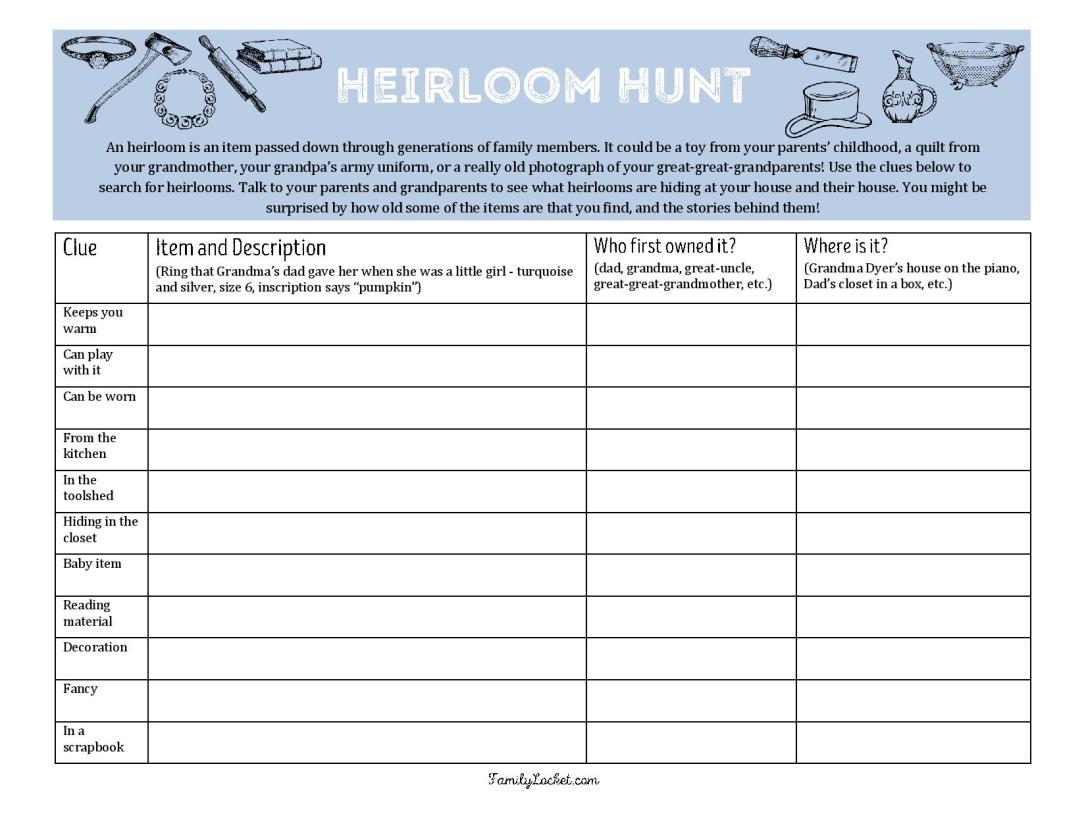
Holding something that once belonged to an ancestor can be a powerful experience. Pictures and heirlooms make the past come alive. Children especially enjoy photographs that show how clothing and hairstyles have changed over the years. Keep photographs and family heirlooms around your home, so children are constantly reminded of their heritage. Tell stories and histories about the item and its owner.
Attend family reunions
Family reunions are a good way for different generations and branches of a family to come together. A family reunion gives young people an opportunity to know relatives they might not otherwise meet. It gives them a chance to create experiences and memories that can last a lifetime. Help children and youth understand how they are related to each person they meet. For example, you might say, “This is your great-aunt Phyllis. She is your grandma’s older sister.”
Go on family history field trips
Children of all ages enjoy field trips. A family history field trip could be across the country or just down the street. Visit places your ancestors lived or worked. Visit graveyards. Go to museums or living history exhibits, such as a historically re-created village or a historical farm that shows how your ancestors lived. Celebrate your family’s ethnic heritage at a cultural festival. Use an Internet search engine to help you find festivals and living history exhibits in your area. Above all, make these trips fun for the children.
Play family history games
Games are a good way to make family history fun. Family history board games are available for purchase, but you can also make up games that are specific to your family. It’s easy to create a trivia or matching game or adapt a common game such as Bingo. Your children could even help make up the game. For examples of family games and instructions on how to create them, see Appendix A of this lesson.
Involve entertainment
Music and movies from the past are another way to reach young people. Share music from different eras, and teach children some of the dances their grandparents used to dance. Children enjoy learning the old songs their great-grandparents used to sing. Watch movies that were popular during the lifetime of an ancestor or that portray a certain period in history. Children are often amazed to see some of the old silent movies that were popular in the past.
Celebrate with food
Food is an important part of holidays and family gatherings, and it was the same for our ancestors. Make your grandmother’s apple pie recipe or your father’s famous meatloaf for your children. Food from different countries where your ancestors lived can provide an interesting variation on your normal diet. International recipes are available on the Internet and in many cookbooks. You can prepare pastries from France or kimchi from Korea for a special family history meal. Visit http://www.cyndislist.com/recipes.htm for a list of Web sites that can help you.
Create personal histories
Help children and teenagers create their own personal histories. They could keep a journal, create a scrapbook, or write stories from their lives. Give them a camera or help them take pictures of events and save those photographs in an album. For a list of Web sites that may help you, go to http://www.cyndislist.com/photos.htm or www.cyndislist.com/scrapbooks.htm.
Tie family history into school work
Make the connection between what children learn in school and their family history. For example, if a child is studying a historical event, tell what an ancestor did who witnessed or participated in that event. Look on the Internet for information about what life was like during that time period and how wars and other events affected daily life. If a teenager studies a book for school, tell about ancestors who lived at the same time as the author or who may have experienced some of the events described in the book. Help students learn about geography by looking at a map to see where ancestors lived. If children need to choose a state or country for a report, suggest that they choose a place where your ancestors lived. If you have photographs of the area your family came from, you can use those photographs to augment your child’s studies.

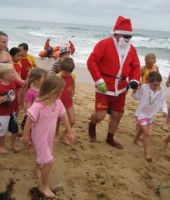 Of course, depending on the climate, things often change. For instance in Australia, where their Christmas is celebrated during their summer, their Santa Clause wears shorts and trades in his reindeer for kangaroos. The dinner consists of cold food such as fish and crackers. In the Falkland Islands, where 3,000 people and 150,000 sheep live, lamb is their food of choice because turkey is very expensive to fly from the United Kingdom. In Venezuela, they have ‘hallacas’ which is a combination of beef, pork, chicken, capers, raisins, and olives rolled up in plantain leaves and steamed. This is reminiscent of the tamales that are such a mainstay for
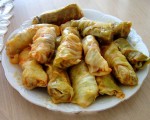 Mexican families during the holiday. In Croatia, the meal on Christmas Day is often turkey, goose or duck with a side dish of ‘sarma’ (cabbage rolls filled with minced pork meat). They also top off the meal with ‘Krafne’ filled with jam, jelly, marmalade or chocolate.
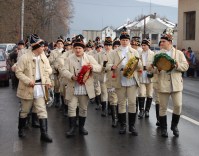 Celebrations are also a constant in each country with plays, nativity scenes, and caroling a large part of this holiday. In the Dominican Republic of Congo, full musical evenings with multiple choirs and nativity plays last long into the evening and early morning. In Brazil nativity scenes called ‘Os Pastores’ (the Shepherds) are available for everyone to enjoy. In Romania ‘dubasi’ or bands of 50-60 unmarried men sing through the streets, the same happens in Greece where the young men carry wooden
 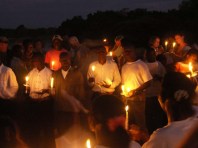 boats and receive gifts. Going to Mass for church services is also the norm as in Portugal where the “Missa do Galo” or mass of the rooster is celebrated. In South Africa, where it is a hot time of year, people walk through the streets singing carols by candlelight. What a beautiful sight that must be!
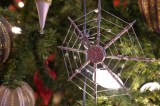 shapes and forms are the norm as well with spider web decorations in the Ukraine part of bringing good luck into the homes. In Greece basil is kept in a bowl of water in the middle of the table and used to sprinkle holy water throughout the house to ward away evil spirits. Nativity scenes or creche are often used as decoration as in Malta where the nativity cribs called ‘presepju’ are decorated with ‘pasturi’ or shepherds and angels. Also, seeds such as wheat, grain, and canary seed ‘gulbiena’ are grown to decorate the bed of the baby Jesus.
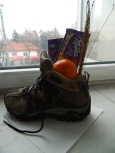 the weather is warm this time of year, ‘jandals’ or flip flops are a favorite gift. Speaking of shoes, in some countries the shoes are dusted off and left out to be filled with sweets and presents this is also true of socks. Not only are presents left under the tree, but are places in shoes as in Romania and Portugal and are often delivered by the baby Jesus as in Slovakia.

 Melcena Irvine Millison, 1889 – from family collection



 Pictures have a way of inspiring my writing and this one, in particular, speaks volumes.
 Sometimes events happen in life that forces us to remember. We go about our busy lives – taking kids to soccer and football, or picking up grandchildren (depending on your phase of life) and trying to fit exercise into our schedule and then bam! Something happens and we are forced into remembering our ancestors – those who have gone before us or even those we have had lifelong relationships that have passed. That happened to me this week.


 Rachel J. Trotter is a senior writer/editor at


 Genealogy for Children